
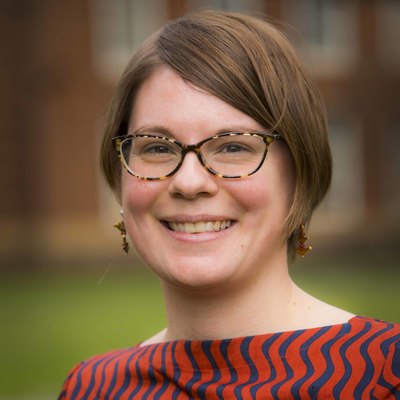
Julie Stephens teaches South Asian history in the History Department at Rutgers University, New Brunswick and is the faculty co-adviser for the “Law and History” minor. She has been working with Gardner Fellows since 2019, serving as a faculty adviser for projects on comparative approaches to regulating places of worship in the US and India during the pandemic, grassroots activism surrounding how caste is taught in K-12 curricula, and the role of presidential rhetoric in shaping US-India diplomatic relations. Her own educational journey has meandered across the disciplines of social and political thought, South Asian languages and literature, history, and law. She has found the Gardner Fellowship to provide a unique community at Rutgers that brings together faculty and students in deep conversations about our concerns for the world around us and our hopes to forge more just futures. After having particularly thought-provoking conversations with fellows in recent years about the impact of social media and artificial intelligence on their own lives, and on the future of democratic governance, she looks forward to exploring these themes in the Gardner seminar.
She is the author of Governing Islam: Law, Empire, and Secularism in Modern South Asia (Cambridge University Press, 2018) and Worldly Afterlives: Tracing Family Trails Between India and Empire (Princeton University Press, 2025). She is currently starting a new project on a collective global biography of Indian Americans who lost their citizenship after the US Supreme Court declared them ineligible on racial grounds in 1923. She hopes to use their stories to think about the lived experience of global mobility under the precarity of legal statelessness. She lives with her partner, Johan Mathew, and daughter Lily across the river in Highland Park, and does some of her best thinking walking back and forth on the bridge between HP and NB.